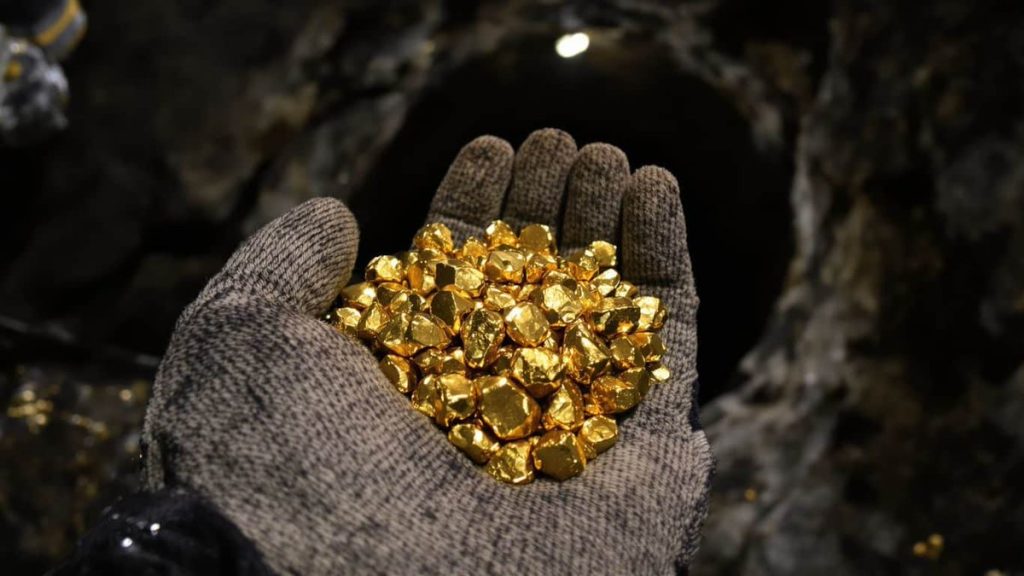
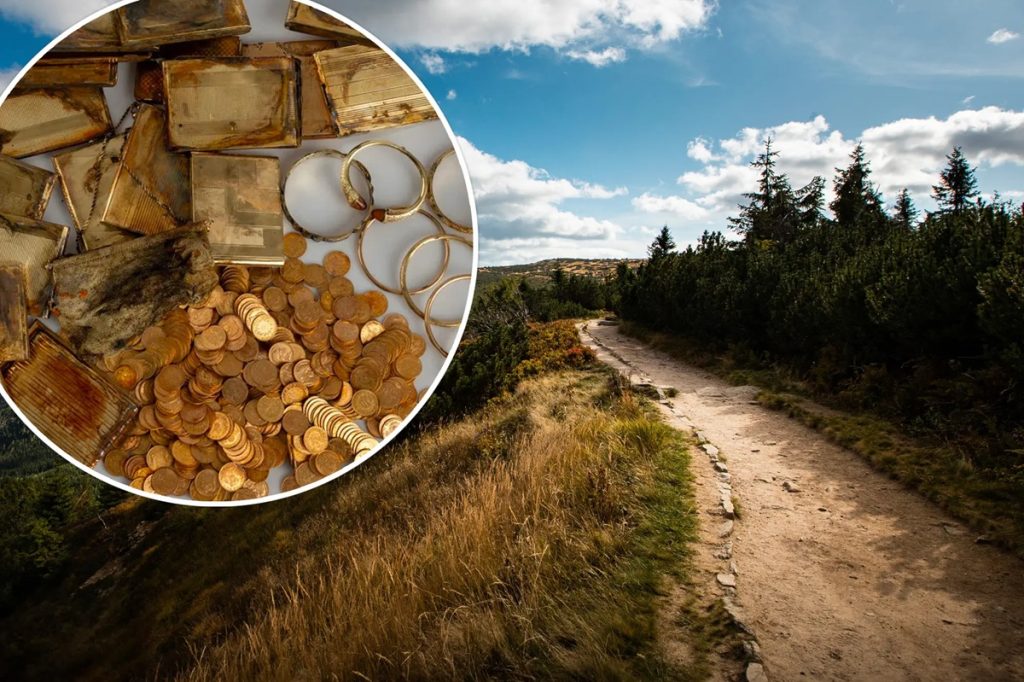
The gold in this region does not come from magmatic processes, but from ancient rivers.
Since the end of the 19th century, the Witwatersrand basin has established itself as a global benchmark in the mining sector, contributing approximately 40% of the gold mined throughout human history. This discovery, which is not recent, has significant historical value, but its magnitude has once again aroused the interest of the scientific community.
In the Witwatersrand formation, located in South Africa, recent research has confirmed that the mountains, which rise more than 1,900 metres above sea level, harbour the remains of an ancient river system that concentrated thousands of tonnes of gold more than 2.7 billion years ago.
However, new geological models are providing a deeper understanding of how and why this metal accumulated in such abundance at this altitude.
The area that harbours gold at an altitude of over 1900 metres

Geological history hides countless enigmas. The Witwatersrand gold was not formed through magmatic processes, but was the result of primitive rivers that, during the Archaic period, transported metallic particles to the beds of ancient valleys. Over millions of years, sedimentation, pressure and tectonic activity consolidated these deposits into conglomerates that are now found at high altitude.
Reports from international entities such as the USGS and the South African Council for Geoscience corroborate that, adding up what has already been mined and what remains, the region is home to reserves that may exceed 30,000 tonnes. For this reason, it is considered the most significant natural mine ever documented.
The evolution of gold in Witwatersrand
The mining boom was one of the key elements that transformed the landscape and gave rise to Johannesburg, now recognised as the economic capital of South Africa. Deep mining, which exceeds three kilometres below ground, marked the advancement of modern mining engineering. Despite environmental and social challenges, the region remains a symbol of large-scale mining.

Witwatersrand gold not only contributed to the economy, but also fostered the creation of scientific institutions, universities and safety standards that were later adopted by other mining countries. It is, in essence, the core upon which an entire nation was built.
Secrets buried in the mountains
Although the large veins have been mined for over a century, geologists say there are still unexplored areas on the edges of the basin. New seismic exploration and deep sampling techniques seek to identify hidden concentrations of residual gold trapped in older layers.
Scientific expectations focus on gaining a deeper understanding of the processes that gave rise to these unique deposits and how they could be replicated in other regions of the planet. Witwatersrand remains, even today, a window into the deep past of the Earth and one of the keys to understanding the formation of mineral resources on our planet.